
Psychologist’s Perspective: October 2026

It is hard to believe it is already the end of October! We thought we might continue the theme of helping our kids at home with their executive function. As we know, schoolwork, emotional regulation, mental health, and physical health are largely dependent upon our executive functioning.
If our brain’s operations manager is offline, the brain struggles with regulating anything else. The body reflects dysfunction in a variety of ways, including sleep loss, body aches and pains, headaches, stomachaches, vertigo, sore throats, earaches, and more. This is not to suggest there are no legitimate reasons for pain; it is simply to remind us all to be curious about what else might be happening beyond typical physical ailments.
Worry is convincing and can often persuade us to believe there is a physical illness. If we focus first on executive functioning, what do we notice about the health of our child? Building skills means not rescuing and hoping our children remember how we solved a problem for them. Building skills requires a willingness to allow our child to sit in discomfort, practice skills when they are regulated, scaffold support, and eventually back away to foster independence. This can be hard as a parent when your child is crying over hurt feelings or perceived injustice. However, building skills lasts a lifetime, encourages perspective-taking, builds empathy, and fosters independence.
This month, we will take a closer look at emotional control and stress tolerance.
Understanding and regulating emotions is important
How many of you have heard the phrase “name it to tame it”? What does this mean?
Learning how to identify your feelings is an important first step in regulating emotions. Where do they show up in your body? How do they feel? What is their intensity (0–10, with 0 being not noticeable and 10 being unmanageable)? When we shift to these questions instead of asking why, we help our child build body awareness.
Feelings are not facts. Hurt feelings do not mean someone else intended to cause harm. Sadness does not mean someone intended to be unkind. Feelings are chemical responses in the brain. There are times when they show up in response to an interaction or a physical experience, and there are times when they show up just because. They are a personal response to our surroundings or our thoughts. They are not an objective truth about reality. Our brains use shortcuts to justify or explain an emotion. For example, “I feel sad and hurt because a friend ignored me.” The brain filled in the “because” part. It is possible that the friend ignored you, and it is possible that you interpreted an action as being ignored when the friend did not hear you speak, was distracted, or was talking to someone else.
The brain interprets emotions through experience. It quickly pulls together past experiences, feelings, and physical responses, and it is impacted by fatigue, physical health, stress, and surroundings.
So, how can we help build skills?
- Encourage our child to pause and observe.
- Look around and gather objective facts. What do I notice? What is happening? How is my body feeling?
- What can I try? For example, ask my friend if they heard me. Speak louder. Ask them for feedback using “I feel” and “I notice” statements: “I feel hurt because I asked you a question, and I noticed you did not answer. Did you hear me?”
- As a parent, conduct an investigation and become an emotion detective with your child once they are regulated. “I know you feel sad about your friend. Let’s explore: Did your friend play with you at any point today? How did you feel when you got to school? What went well during the day? Who else were you talking to today? Which lesson went the best today? Which lesson was the hardest? What did you have to eat today? Did you feel full? When did you notice that you were feeling sad? What helped when you were feeling sad? Where did you notice it in your body? How are you feeling now?”
- Work through a breathing exercise or a progressive body relaxation exercise.
- Validate their work. Normalize the fact that feelings come up and can be difficult and that we can be in charge of our bodies and thoughts.
- Practice! Model this for your child. “Today, I was feeling overwhelmed and sad. I started thinking I was not doing a good job. Then I told myself to stop. I looked at the job I was doing and realized I was doing some good work. I realized I am a good worker. I told myself I am a good worker. I still felt sad, but the feeling was smaller than it had been. I know that if I keep practising, I can be in charge of my feelings.”
This is a process. It takes time, and our own protective parts come out and want to solve the problem. Ultimately, we want our children to feel safe and secure. Living life is also about managing our distress. The sooner our children learn skills to regulate their distress, the better.
This leads me to stress tolerance: enduring pressure, stress, and uncertainty and sitting in discomfort.
In our modern world, we have many quick fixes for discomfort. We watch a show, listen to music, doomscroll, message friends to “vent,” increase our activities, recruit people to agree with us, and more. Is being bored so bad? Is sitting with ourselves and our feelings and being curious harmful?
No.
Being bored, uncomfortable, or stressed is not a bad thing. Boredom allows our brains to drift and curiosity to flourish. We can stretch our imaginations and see things around us in a new or different way. We can scan our bodies to build connections between how we are feeling and where these feelings live.
How can we help?
- Remember that our children are doing the best they can. They will make choices we do not like, and that is part of learning and growing.
- We want to keep the bar achievably high.
- Follow their lead in sports, music, dance, and other interests. We have already lived our lives. If they are passionate about something, support it. They don’t need us to be their coaches or judges. They need us to cheerlead, support, and reflect. If they think they are not training enough, we can support them by being curious, stating facts, and wondering about how they are balancing their passions with sleep, friends, food, health, and emotional wellness. Teaching our kids how to lose, take perspective, and view events, exams, games, and performances as moments in time instead of monumental, life-changing, or defining events builds resilience, commitment, and learning.
- Celebrate the moments, always. What went well? What did you learn? What do you want to try differently next time, if anything? Let’s celebrate what went well.
- Distress tolerance is important, and we can increase our ability to tolerate distress. Did you not do well on an exam? Okay. What might you want to change in your preparation next time? How can I support you with that? Does it make sense for you to book time with your teacher to practise some of the questions you did not get? You felt uncomfortable in class, with a friend, or during a meeting. Where did you feel it? What did you try? Practise skip-counting backwards by whatever number your child can manage, as well as breathing. What happens to your discomfort when you relax?
- Practise boredom. Everyone can sit in a room without talking, television, phones, or stimulation and practise sitting for two minutes and then five minutes. Debrief afterward. How did it feel? What did you notice? What were you looking at? What thoughts went through your head?
We do not need to be entertained all the time. It is good to sit and observe. Practise noticing your surroundings. Ask your child to tell you what they can see, hear, smell, touch, and taste. This is also an important skill for regulating emotions. We talk about 5-4-3-2-1 for anxiety—tell me five things you can see, four things you can hear, three things you can touch, two things you can hear, and one thing you can taste—as a way of settling the system. This also works for boredom, stress, and emotional regulation.
Additional Resources
Counselling Services and Wraparound Support
If you have any questions or concerns regarding any aspect of your child’s learning journey, please reach out to our Head of Student Supports, Paige McDonald.
Serena Braun, Registered Psychologist, provides short-term (6–8-session) counselling to students in Grades 3–12.
Demetra Mylonas, Student Wellbeing Specialist, continues to provide SEL and wellness support to staff and small groups of students.
Double the Impact, Double the Inspiration: Support Calgary Academy’s Speaker Series through Rogers Birdies for Kids presented by AltaLink
At Calgary Academy, we believe that students thrive when they are exposed to diverse perspectives, real-world insights, and meaningful dialogue. That’s why this year’s Rogers Birdies for Kids presented by AltaLink (BFK) campaign is focused on funding our speaker series, which is a transformative initiative bringing expert voices into our classrooms for both staff and students.
“It’s not about the amount, but it’s about the impact we can create together. Every donation—big or small—adds up to something powerful.” – Debra Klippenstein, Director of Philanthropy.
Each year, CA selects a key project to support through BFK. This year’s choice was easy: the speaker series has been a catalyst for student engagement and teacher enrichment, covering topics like resilience, cybersecurity, digital citizenship, and DEI.
“When we bring in experts, the message resonates differently,” says Sarah Hoag, Director of Stakeholder Engagement. “They have stories and insights that stick with students, and sometimes all it takes is one speaker to spark lasting reflection or even change a life.”
From a decorated cybersecurity expert, Kathy Macdonald, sharing safe practices online, to powerful sessions and workshops on bias and resilience with former RCMP officer, Kwesi Millington, recent speakers to CA have brought authenticity and authority into learning. Students responded not just with attention, but with genuine curiosity.
“After one session, a student came up to me and said, ‘You’re the person that brought Kwesi Millington in. He was amazing,’” Sarah recalls. “Another teacher overheard a student say, ‘I wish we could get more speakers like that.’ That’s the kind of impact we’re aiming for.”
But meaningful programming like this comes with a price. Booking top-tier speakers, often nationally recognized experts, requires funding. Travel, accommodation, and speaking fees add up quickly.
“These are people whose work is their craft. They don’t just talk at students, rather they inspire, inform, and challenge them. That kind of learning opportunity is worth investing in.” – Sarah Hoag, Director of Stakeholder Engagement
This is where BFK shines. With 100% of donations going directly to CA and up to 50% in matching funds, the campaign multiplies the value of every contribution.
“Money raised through donations provides us the opportunity to expand our educational offerings and bring in new resources that tuition alone cannot cover,” Debra explains. “Whether it’s a science lab, the foods program, or the speaker series, philanthropy makes it happen.”
Even small donations matter. Last year, CA staff led the way, demonstrating that giving back doesn’t require a large gift but rather a shared commitment to community.
“We’re so fortunate to work with people who lead not only with their time and talent but also their treasure,” says Debra.
As the speaker series grows, so does the opportunity to involve our broader community. Sarah is hopeful about what’s next, saying, “I’m excited to see more ideas for speakers come from our families and staff. This is how we keep learning alive, not just inside the school, but well beyond it.”
By donating today, you’re helping bring these voices into the room—voices that challenge, uplift, and inspire our students to be more curious, more compassionate, and more confident in the world they’re building.
Ready to Double Your Impact?
Make your donation before August 31 and support Calgary Academy’s speaker series through BFK. Click here to donate now.
A Legacy of Impact: Calgary Academy and Rogers Birdies for Kids Presented by AltaLink
At Calgary Academy (CA), learning is about curiosity, connection, and creating opportunity. For the past several years, Rogers Birdies for Kids presented by AltaLink (BFK), has been a vital partner in helping us do just that.
We’re proud to share that CA has again been selected as a charity of choice for this initiative, a charitable program under the Calgary Shaw Charity Classic Foundation. Every year, this opportunity empowers our community to make a greater impact, with donations matched by up to 50%. Since 2022, BFK has incredibly raised over $26,000 for CA, directly supporting our students, programs, and school community.
This year, funds raised through BFK will launch a dynamic speaker series, which will bring expert voices into our classrooms. Covering topics like mental health, resiliency, digital citizenship, and diversity, equity, and inclusion (DEI), these sessions will equip students and educators with valuable tools and perspectives.
In 2022, BFK helped elevate one of our most meaningful traditions: the Legacy Award. This annual honour recognizes graduating Grade 12 students who lead with kindness, character, and commitment. That year, Kallen Velker received the prestigious award, which helped ease the financial impact of her post-secondary education.
“Winning the Legacy Award was just a reminder that I can do anything and that I’m capable of balancing all the things that are on my plate, even when times get hard.” – Kallen Velker
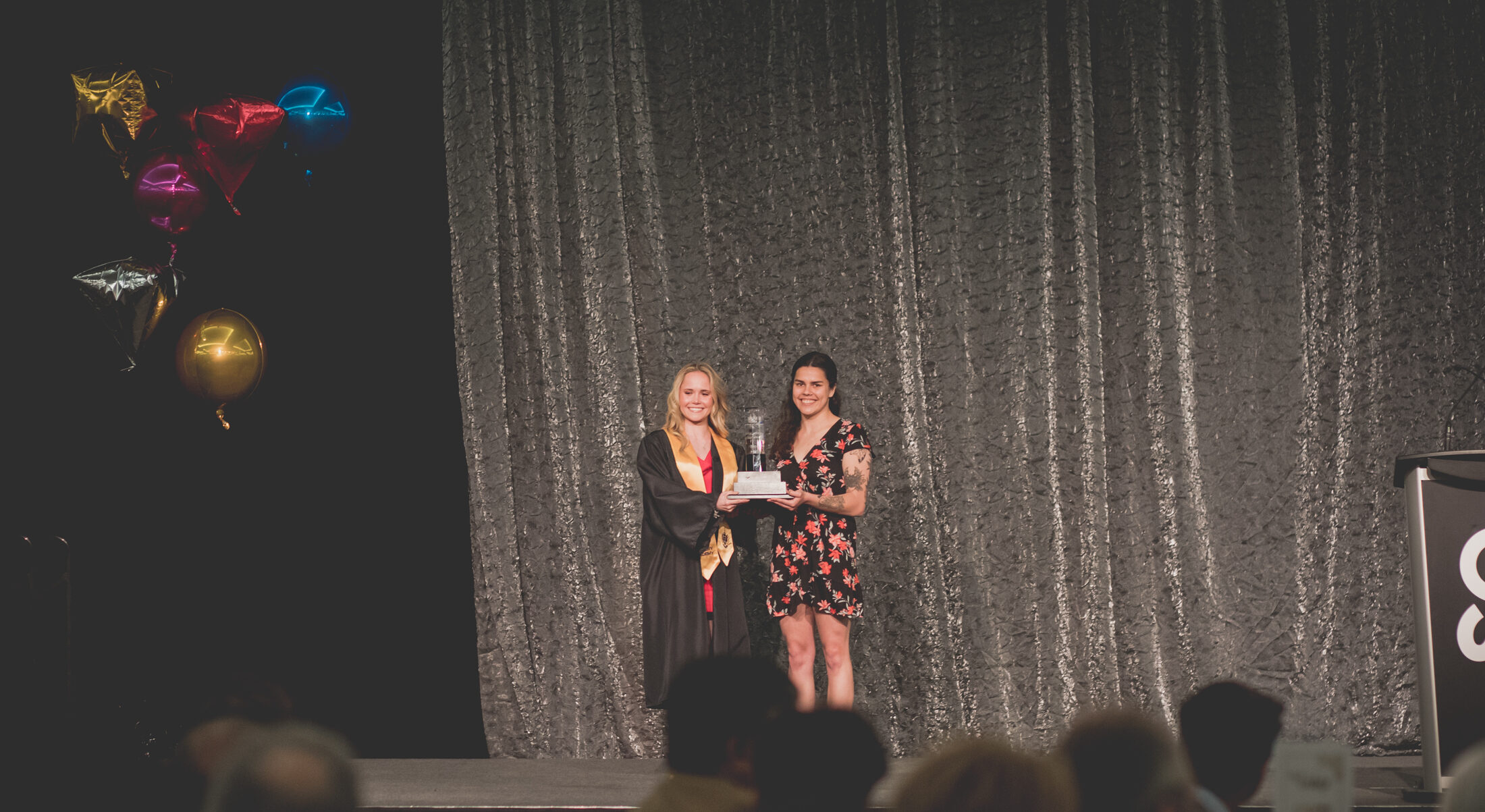 The award inspires a ripple effect across grades, encouraging students to reflect, give back, and invest in the CA community. It creates a lasting connection for recipients, and many return to support future grads.
“The Legacy Award is not about being the loudest voice. It’s about the quiet, consistent impact that a student leaves behind. This is one of the reasons I think so highly of this award and why BFK’s support was so impactful,” says Kaitlyn Parks-Gierl, Grade 12 teacher and this year’s Graduation Coordinator.
Read more about Kallen’s journey thanks to BFK here.
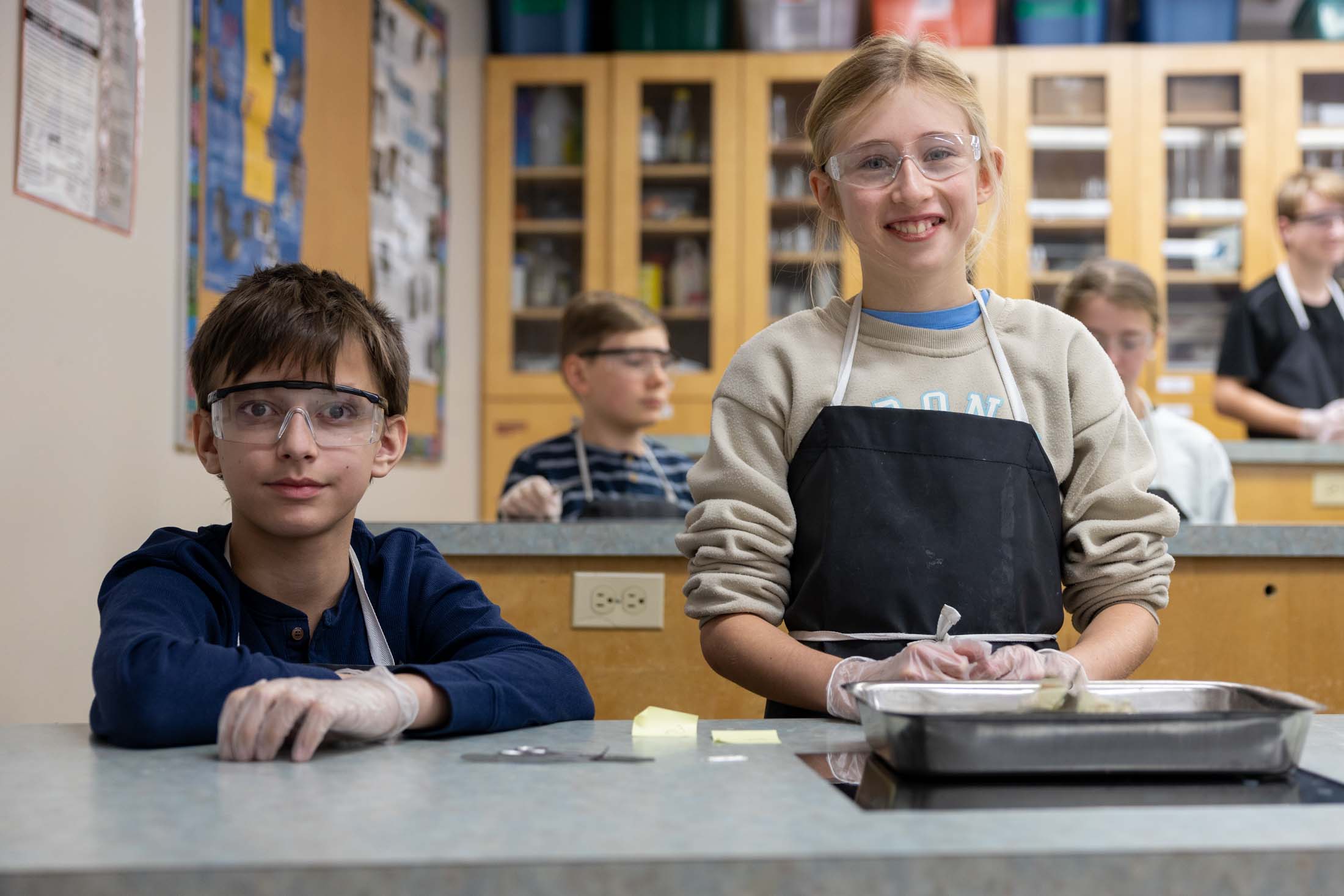 In 2023, BFK helped fund major renovations and upgrades to our junior science lab, and the impact was immediate.
“The new space has made it easier for students to work in groups, ask deeper questions, and show greater confidence in applying scientific thinking,” says Tanis McLeod, a Grade 8 science teacher.
The result? Science transformed from something students read about into something they actively experience. Students are developing critical thinking, collaboration, and real-world problem-solving skills that last a lifetime.
“Looking ahead, I hope BFK can continue to fund initiatives that spark curiosity, build confidence, and foster a sense of belonging for all students. These kinds of experiences can help students connect their learning to the real world, develop skills, and see themselves as contributors to their communities.” – Ms. McLeod
Read more about the science lab enhanced by BFK here.
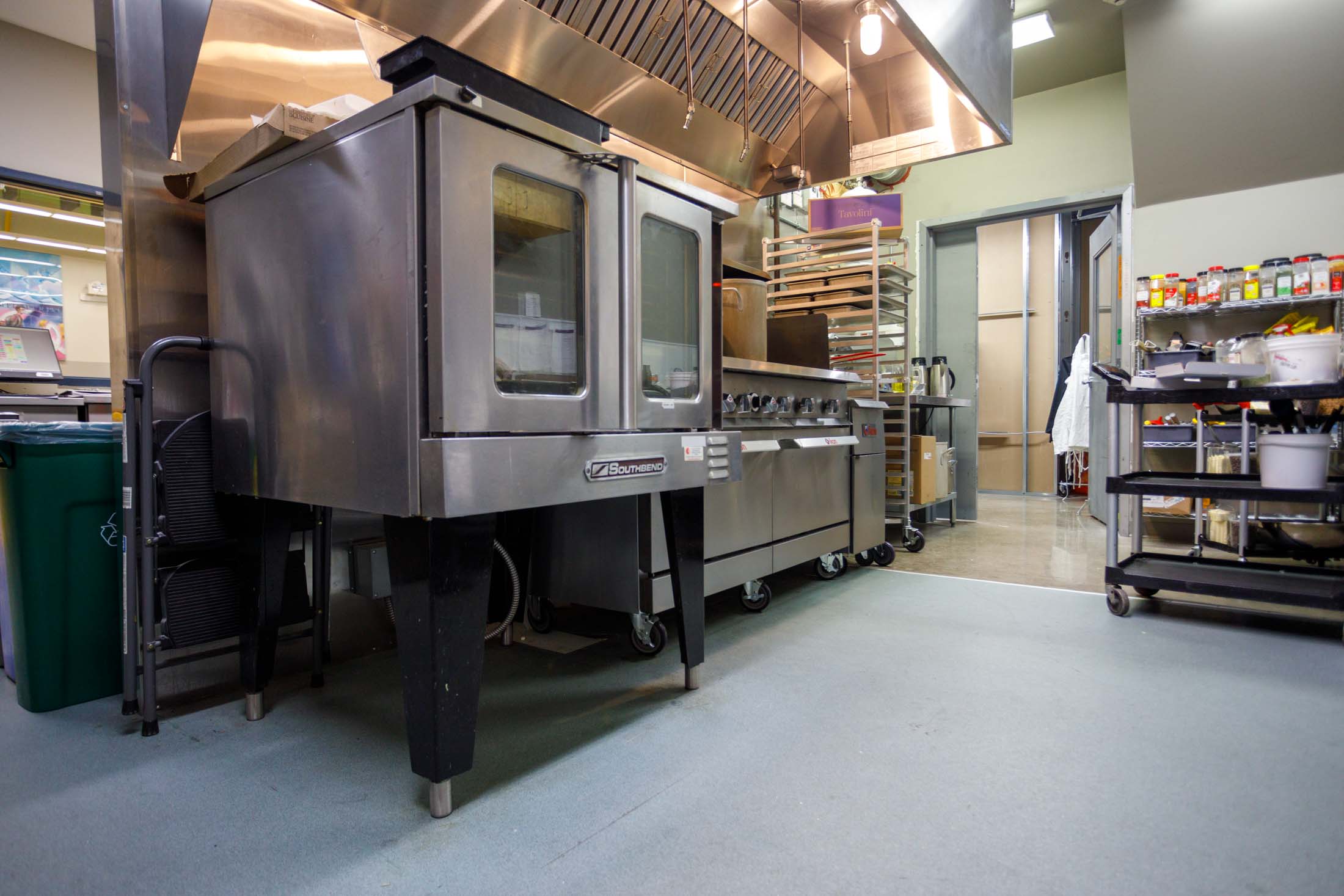 Launched in the Fall of 2024, our Foods program was also supported by BFK. This popular Integrated Studies (IS) course now serves 156 students and teaches far more than recipes. From kitchen safety, recipe math, teamwork, and how to take pride in their work, students are not only getting to eat the fruits of their labour, but most importantly, enhance their problem-solving and life skills that will benefit them from years to come.
With internships and industry exposure, students are gaining career-ready experience and exploring a future in hospitality.
“The support we receive from initiatives like BFK to launch programs like this is truly transformative and sets students up for long-term success. Programs like Foods are essential as they teach real-world skills, nurture student interests, and empower learners to confidently navigate daily life and future careers.” – Chef Brown
Read more about the launch of this innovative program thanks to BFK here.
Looking Ahead
“CA exists to empower unique learners, and continued support from BFK helps us do just that by funding innovative programs that meet students where they are and challenge them to grow into who they want to be. With support from BFK, we can continue to lead the way in inclusive, individualized education, giving students access to the tools, technologies, and environments they need to thrive.” – Ms. Parks-Gierl.
Want to make a difference? Donate to Calgary Academy through BFK today here!
September 2024 Agenda
- Welcome/Agenda/Land Acknowledgement – Shayne Arnold
- Welcome from the CEO – Greg Bass
- School Update – Tim Carlson
- Community Engagement – Sarah Hoag
- Volunteer Update – Christa Walsh
- Pathways to Post Secondary – Jessie Holwell and Alison Thom
- Thank You/Adjournment
Trading Places: Bridging School Culture Through An Exchange
In today’s world, experiences that create an understanding of new cultures, foster empathy and connection, and give students long-lasting memories are invaluable. One such opportunity unfolded earlier this month for Grades 7-9 students at Calgary Academy, who flew to the other side of the country to New Brunswick to take part in CA’s first school exchange.
CA Senior School teacher, Grayson St-Laurent, originally began his teaching journey on the East Coast at the University of New Brunswick (UNB).
“When I was studying at UNB, I was teaching under Mark Paquette at Bliss Carman Middle School as part of my practicum. It was through that mentorship that the opportunity happened about a year ago when Marc reached out to me wondering if CA would be interested in an exchange.” – Mr. St-Laurent
Welcome to New Brunswick, CA!
The journey for 13 Calgary Academy students continued nearly five years after that practicum when they touched down in the historic city of Fredericton in the middle of the night. Their itinerary was packed with many activities, including team bonding exercises, basketball skills training, a spirited school dance, visiting with their billet families, meeting a Member of Parliament, and touring many important landmarks around the city. The biggest challenge and opportunity for students was “just stepping outside their comfort zone and trying new things,” says Mr. St-Laurent.
While exploring the sights and sounds of another city was memorable, their experiences in Calgary also provided them with a fresh perspective as they hosted the Bliss Carman Middle School students upon their return from New Brunswick.
Sharing the Spirit of the West
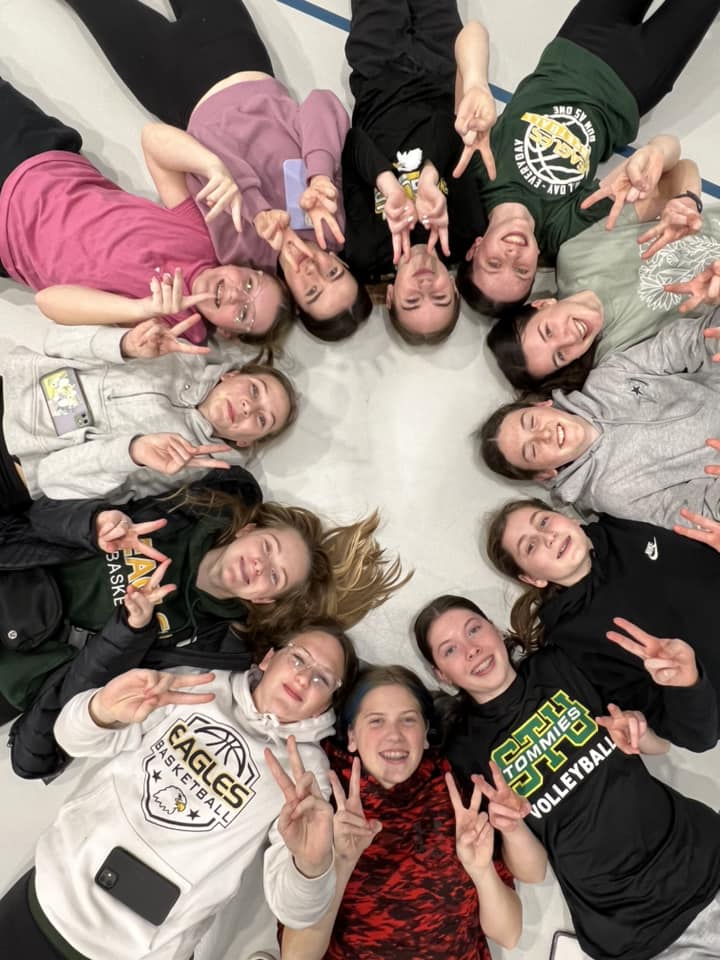 Students shared local activities with our visitors such as Stampede School, which highlighted Indigenous customs, cultural traditions, and the values of Western Canada, including the students being bestowed with the iconic Western honour of being ‘White-Hatted’! Their tour continued to Banff, where the incredible Rocky Mountains left the visitors amazed, including our students.
CA Junior School teacher, Sarah Galbraith, was another educator integral to the exchange. “There were too many memorable experiences, but some highlights were practicing with the UNB Reds women’s basketball team and a training session here with the University of Calgary Dinos.”
Ms. Galbraith emphasized the biggest lasting impact of this exchange was the many friendships formed over the two weeks. While the New Brunswick students have returned home, the students are still talking every day.
“My biggest takeaway was the invaluable time spent outside of the classroom engaging with our students. We also had the opportunity to connect with educators from across Canada and learn so much from them and their school culture. I hope that 20 years from now if the students are travelling to each other’s provinces, they will connect!” – Ms. Galbraith
For everyone involved, the exchange wasn’t just about switching locations—it was a learning journey. Familiarizing themselves with another school’s culture and traditions, experiencing two cities through a fresh lens, and sharing in local customs will be an experience students will never forget!
A World of Possibilities Awaits in the Lab
Buttoning up a crisp white lab coat, snapping on a pair of gloves, and slipping on protective glasses is just another day in the life of Calgary Academy science teachers ready to teach the next generation of scientists. Whether it’s glass beakers lined up on the countertops ready to mix solutions, microscopes set up to observe the delicate parts of a cell, or Bunsen burners emitting a glowing flame to create a chemical reaction, there’s never a shortage of how our educators work to bring textbooks concepts to life in any of CA’s three labs.
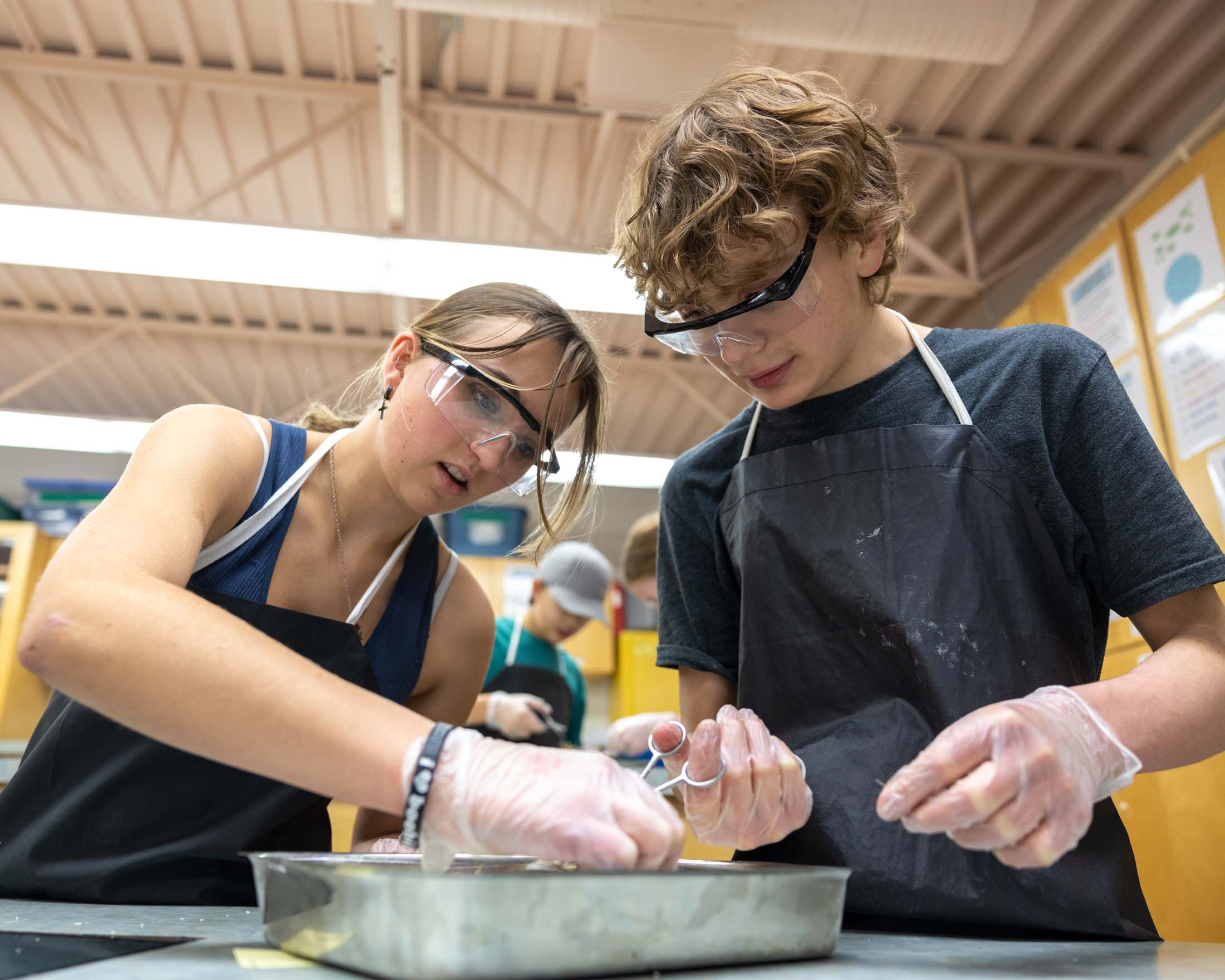 This summer, with the support of Shaw Birdies for Kids presented by AltaLink, Calgary Academy will modernize and expand the existing Junior Science lab into a hands-on, flexible space that encourages active engagement in the scientific process. This shift from an observation-style traditional laboratory floor plan will allow students to engage deeply in their learning, and better prepare them for our rapidly changing and technology-driven world.
While science is undoubtedly fascinating on paper, it’s within a dynamic and intricate lab setting that can make all the difference in how students can have fun while applying their knowledge, which according to science teacher and Blended+ program lead Kim Petersen, is “where the real learning comes in.”
“What I love the most about teaching science is watching the light bulb come on as students take something complex and start to understand how it all connects. The magic starts in the lab and if I could teach every lesson with a hands-on component, I would.” – Ms. Petersen
 Katie Heidt, who has been teaching in CA’s Junior School classrooms for the better part of 10 years, shares similar sentiments about the importance of lab facilities to reinforce concepts. Pointing to how students are “innately curious by nature”, science labs allow teachers to foster creativity and passion in students.
Albert Einstein said it best: “The important thing is to never stop questioning.” To bring concepts to life in a more modern and enhanced way with upgraded lab facilities is necessary.
“Our job as educators is to help create global citizens. Developing critical thinkers and problem solvers is part of our job and science labs are one of the best vehicles to teach those attributes.” – Ms. Heidt
Shaw Birdies for Kids presented by AltaLink is a vital fundraiser for enhancing the CA community. Not only are 100% of donations given back to CA, but Birdies for Kids will match it by 50%. To make an impact today until August, click here.
15,000 km Away Still Feels Like Home
Imagine yourself on a safari, driving down a bumpy dirt road through savannah plains and spotting animals you’ve only seen in movies or the zoo. Then, imagine yourself trekking through a picturesque mountain rainforest with monkeys and birds making noise high above your head. Picture yourself carrying heavy rocks and cement among cheers from young, grateful students.
Two groups of Calgary Academy students travelled nearly 15,000 km over Spring Break to make this their reality. The International Travel Studies (ITS) program has been offered to Senior School students since 2005 and this year was a full circle moment–returning to the first country the ITS program ever visited.
“The purpose of ITS is to show our students what the rest of the world is like and to give that humanitarianism back to the students. Every year we do humanitarian work on the trips and this year was just ‘wow’.” – Ms. Pfeifer, ITS Coordinator
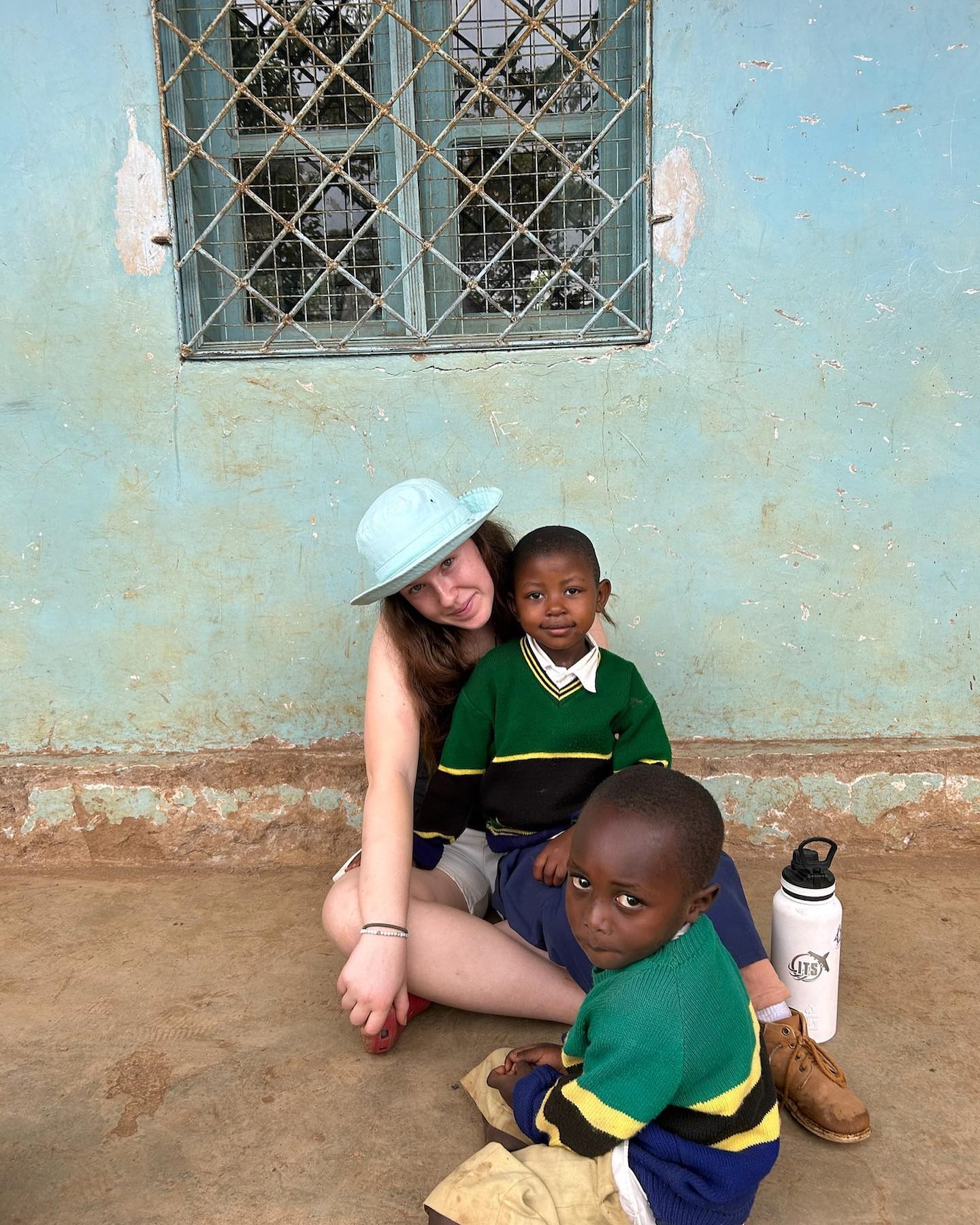 ITS’s first group of 14 students and two teachers first set off for Tanzania 18 years ago where they helped paint Nkuu Primary School, which is situated in a small Tanzanian village. Nearly two decades later, altruistic work continues to evolve in this small school to give the students an enhanced educational experience. This year, the tasks for the ITS crew included hauling cement, rocks, and dirt to construct new bathrooms. One of the final highlights of this year’s trip–aside from the many games and bonding moments with the students–was painting a mural and leaving their mark on this community forever with a handprint.
For two Grade 12 students, Mac W. and Cairine C., their first ITS trip was “life-changing.” They had the chance to visit a country they wouldn’t necessarily travel to otherwise and gained a new perspective on life after working with a group of incredibly friendly and positive young students during their time there.
“Gaining more empathy was the biggest part of the trip for me. Everyone there seemed so joyful and so grateful for what they had. I’ve been asking myself, ‘How can I be as happy as these people who have less than me?’” – Cairine C.
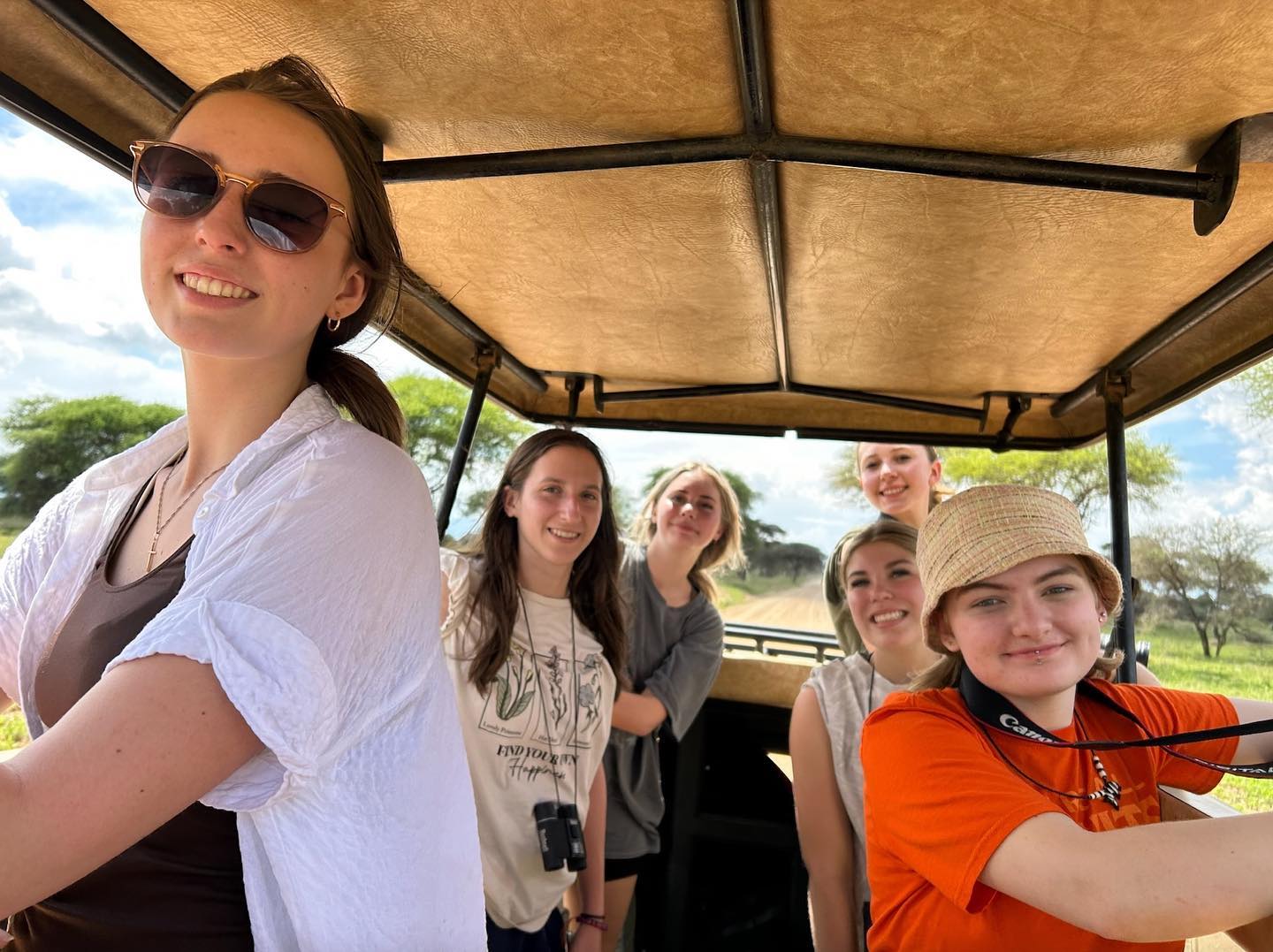
The Safari of a Lifetime
When final goodbyes and hugs to the Nkuu students were done, students were eager to explore the rest of this beautiful country. From the Serengeti, Tarangire National Park, Lake Manyara, and Ngorongoro Crater, the sightseeing portion of their adventure welcomed students with open arms. Students were elated to see so many animals, including a pride of lions, an elusive leopard, giraffes, elephants, cheetahs, and even a cheeky monkey who jumped over students to snatch a chocolate bar.
While this year’s trip was relatively smooth sailing, there were opportunities to practice their resilience and adaptability skills. From flight cancellations, which included a longer pit-stop in Amsterdam for some, to adjusting to drastic time changes, and long, yet rewarding, days, the students’ spirits were unbreakable.
Making Unexpected Moments into Memories
Ms. Rudin, a Senior School teacher fortunate enough to chaperone her first ITS trip, was astonished at how well students handled the unexpected. Not everything can go to plan, and it’s ultimately how situations are handled that is an integral learning lesson in life. “Both students and teachers got to spend a lot of time together, and we were able to support each other and make it the best trip ever.” For one of the groups, there was a slight flight delay at the end of their trip that provided some much-needed downtime, becoming “the most relaxing part of the trip that wouldn’t have happened otherwise.”
When asked to give advice to students who might be considering signing up for a future ITS trip? “Take advantage of this opportunity and just go for it,” says Mac W., a Grade 12 student who took part in ITS for the first time this year. “I’ve changed since getting back, especially noticing more about how I act and what I am grateful for. It changed my point of view about what I have and how grateful I am for it.”
To learn more about the ITS program, visit the Clubs & Activities page here.
Changing Lives, One CA Student at a Time
The moment Kallen Velker’s (’22) name was announced as the winner of the Legacy Award at Calgary Academy’s Class of 2022 graduation ceremony, she was “shocked.” Greeted with cheers and claps from her peers and teachers as she made her way up to the stage, she knew all her hard work throughout her CA experience had come full circle.
Kallen, who started at CA in Grade 4, is currently studying at Mount Royal University with hopes to study Interior Design. Between a rigorous training schedule for competitive Irish dance and her school studies, Kallen credits winning the Legacy Award scholarship for easing the financial stress that comes with pursuing your passions and dreams—thanks in part to the Shaw Birdies for Kids presented by AltaLink fundraiser, running from now until August.
“Winning the Legacy Award was just a reminder that I can do anything and that I’m capable of balancing all the things that are on my plate, even when times get hard.” – Kallen Velker
Leaving a Legacy
The Legacy Award was created by Grade 12 students in 2020 to leave their mark on future graduating classes and is maintained through various fundraising initiatives throughout the year to recognize one deserving student at their graduation ceremony each May. Nominees must demonstrate how they have a positive impact on the CA community and how winning the award will impact them, wherever their path leads.
“It’s important to know that the Legacy Award is a community initiative. A lot of times, the students who win awards want to give back to the school community that’s given them so much. This award is valuable for current students to see how everyone can make an impact and think about the legacy they can leave behind here.” – Mike Ross, Senior School Assistant Principal
Your Support is Vital for the CA Community
Shaw Birdies for Kids presented by AltaLink is an important fundraiser to strengthen the CA community—and it looks different every year. Last year, the funds raised set Kallen up for success as she pursues her dreams. This year, funds raised will transform the current Junior Science Lab into an enhanced STEM hub.
This renovation will further incorporate modern technology into lessons to strengthen student learning and prepare them for a future in our rapidly changing and technology-driven world. The best part? Not only are 100% of donations given back to CA, but Birdies for Kids will match it by 50%.
“We at Calgary Academy are honoured to be chosen as one of the charities of choice by Shaw Birdies for Kids presented by AltaLink for the second year in a row. Their slogan ‘Helping Kids, Changing Lives’ is a powerful testament to the efforts of Shaw, AltaLink, and the original Patron Group who brought this vision to life.” – Debra Klippenstein, Director of Philanthropy
To donate to Shaw Birdies for Kids presented by AltaLink, click here.
How Science and Math Fit into the Blended+ Equation
 Developing our logical reasoning and analytical thinking from math and science is vital to our everyday lives, and for students in the Blended+ program, it’s never been more hands-on, innovative, and engaging. Mark Schuegraf, who teaches Grades 9-10 and Katherine Lawrence, who teaches Grades 11-12, are the two new science and math teachers to the Blended+ program, though they are both Calgary Academy veterans.
Welcome, Ms. Lawrence and Mr. Schuegraf
While Ms. Lawrence and Mr. Schuegraf have over 30 years of combined experience teaching at CA, they were intrigued by how Blended+ was giving a school with over 40 years in the community, a fresh spin. They both wanted to be part of Blended+ after seeing how well students integrated into the program in its inaugural year.
“I wanted to be involved in Blended+ because of the flexibility of the instructional design and the whole idea of meeting the student’s needs no matter where they prefer to learn. Students who need to be learning in the classroom every day can do so, and if not, they can also learn at home.” – Ms. Lawrence
The Evolution of Education
One of the biggest disrupters to education was the emergency shift to online learning over three years ago. Mr. Schuegraf was pleasantly surprised he had students thriving online because they were given autonomy outside of their learning. During the day, students could compete in sports and other extracurriculars–which are important to shaping young minds–leading to even greater learning outcomes.
“The biggest reason I wanted to teach in Blended+ is that education changing in the future. For a lot of students, the traditional school experience of sitting at a desk all day is not the ideal way to meet their learning needs. I also like the approach of doing things differently, including more experiential learning, hands-on activities, and shorter chunks of direct instruction. Blended+ allows students more time to get into the flow of learning, which really appealed to me.” – Mr. Schuegraf
A Variety of Learners, a Variety of Ways to Learn
Both Ms. Lawrence and Mr. Schuegraf point out that there is no single type of learner who has benefitted the most from the program. The dynamic nature of the program has been crucial for a wide variety of students, including athletes, those who prefer working at home, and those who don’t want every day to look the same, as it is in a traditional classroom setting.
“Some of the students who originally preferred learning at home have started to come to the school on a more regular basis when we introduced teambuilding activities on the days we are all in. It’s neat to see that growth.” – Mr. Schuegraf
Next up, all the Blended+ students in Grades 9-12 will be taking a field trip to Montreal in May. This off-campus experiential component of the program hopes to bring a real-world spin lens to the different units over the year. Studies aside, it will also aim to give students an opportunity to build friendships with one another – one of the core principles of the program.
“The way I envision the future of Blended+ is that I think we can change the way education works. I have plans to do parts of certain units next year in a fully experiential learning setting, without traditional assignments but with hands-on learning to teach students in a deeper way in a much more engaging and interesting way, which wouldn’t be possible otherwise.” – Mr. Schuegraf
To learn more about Blended+ for Grades 9-12, join an upcoming Admissions tour running until June. RSVP here.
Blended+ Humanities Takes the Classroom to the Real World
 Humanities courses, which are comprised of English and social studies, focus on the richness of the human experience. From reading and deciphering literature to understanding history as it relates to our current world, it only makes sense that the Blended+ program for Grades 9-12 gives students a greater opportunity to learn in the real world.
Welcome, Ms. Heard and Mr. Gierl!
For the newest Blended+ Humanities teachers, Meagan Heard (Grades 9-10) and Markus Gierl (Grades 11-12), their first year teaching in the program has come with many surprises and welcome changes to how they view education and how learning is only evolving in a post-pandemic world.
Ms. Heard, who has been with Calgary Academy since 2008, and Mr. Gierl, since 2017, both jumped at the chance to try something new for the 2022-23 school year. From being part of the design for a new program now in its sophomore year, to having the ability to work even closer with students due to smaller class sizes, they have been pleasantly surprised at how students have responded to the unique elements of the Blended+ program.
“I’ve been really delighted to see the students much more engaged in their learning because they have full control of their learning journey which allows them to understand the material on a deeper level.” – Ms. Heard
Creating a nurturing community for students
Just how many students come into the classroom daily has been a welcome surprise, which is a testament to the nurturing community feeling that the Blended+ teachers are curating.
“Students can choose which environment is better for them, but most Grade 9-10 students come in every single day. I think this is in part because we have created a safe space where students are allowed much more autonomy in their learning, but know they have the support they need to succeed.” – Ms. Heard
A program that caters to a variety of learners
Blended+ continues to cater to a wide variety of learners as the needs of students are just as diverse as its teachings. From competitive athletes accessing coursework from around the world to students volunteering at the Humane Society in their free afternoons to having the chance to take on leadership opportunities with Early Years students in PE, and even taking on additional classes for credits that they would not be able to otherwise, the program gives students a glimpse into life beyond the four walls of CA.
“I have seen students who really wanted more independence, find a lot of success in Blended+ because it’s really the first time in their education journey that they’ve been given the chance to make school decisions that fit with their lifestyle. – Mr. Gierl
Blended+ takes it to the skies…and the stage
While both teachers agree that the students are most looking forward to jetting off on their field trip to Montreal in May, there are lots of opportunities within the robust arts community here in Calgary to take learning to the next level.
“At the end of March, our classes are going to a stage production at Theatre Calgary. The chance to combine the experiential learning opportunities that Blended+ provides with the English requirements of reading a modern play is a nice coincidence. Students can experience how something plays out in the real world while learning the theory in class–which is what learning is all about.” – Mr. Gierl
To learn more about Blended+, join an upcoming Admissions tour running until June. RSVP here.