
Warren Rylands: Supporting Education Worldwide

It was common for Warren Rylands (’03) to spend his childhood days travelling with his mother, surrounded by books and publishers. While reading was a challenge for him growing up, he now helps students with different learning styles access the supports they need.
Warren is the CEO of Lightbox Learning, helping students worldwide access educational tools that support their learning.
Tied to Education
Warren attended Calgary Academy for several years, graduating in 2003. He had always been close to education, with his mother being a teacher who became a textbook publisher and the eventual founder of Lightbox Learning.
He remembers travelling with her frequently as a child (he would now say that the industry is “in his blood”) to accompany her on business. When it came to school, Calgary Academy benefited Warren’s studies, helping him find strategies for his reading skills.
“My parents felt that Calgary Academy might be the best place for me to improve my reading skills. It’s something I think helped me… I had a very positive experience with Calgary Academy. That ability to focus on some of my weak points and make sure that I could improve them so that I’d be ready for university made a big difference for me.” – Warren
After graduating from CA, Warren didn’t initially want to pursue university, preferring to work immediately in publishing. However, his mother encouraged him to pursue post-secondary education first, which he did—attending the University of Calgary and eventually graduating from Simon Fraser University.
Accessible Education
After graduating, Warren began working for Lightbox Learning, an independent Grades K–12 educational publisher. Over the years, he worked to grow the business in the United States and eventually helped implement digital products, supporting learners of all needs.
“One thing that’s unique about us is that when we make a printed book, inside page two is a book code. You go to our website, enter the book code, and get a full-blown interactive e-book.”
After years of hard work, Warren became CEO of Lightbox Learning. He oversees an international company that provides location-based educational media, helping learning stay relevant and engaging with textbooks broken down into slideshows, video, or audio narration when needed.
Operating in 52 countries and serving 20 different languages, Warren is proud of Lightbox Learning’s progress. He has brought the same determination to his work that helped him succeed in school.
“I think when you have a learning disability, and you struggle with something like reading, you have to work harder. You have to put your head down and find ways of becoming a better reader. I think I had the determination to put in more work.” – Warren
Whether improving reading skills, running a company, or preparing to graduate high school, Warren understands the value of hard work. His advice to students and young adults is to tackle their goals one step at a time, no matter how big they may be.
He says, “the only way to eat an elephant is one bite at a time.”
“I think it’s a really important lesson for children when you look at something complex… People think of the end goal, and it’s hard to get there, so they’re just like, ‘I’m never going to do this. I won’t reach that mountain because I don’t know where to start.’ The way to start is one step at a time.”
Parker Morisset: Starting a New Chapter
In June, Parker Morisset (’25) crossed his graduation stage and received his diploma—capping off nine years at Calgary Academy. With almost a decade spent at the school, he left with a wealth of memories, friendships, and achievements.
Fast-forward to September, and Parker is attending Mount Royal University (MRU), building upon the legacy he left at CA as he begins a new journey.
The Foundation of His Future
Parker attended Calgary Academy from Grades 3–12, and he fondly remembers his time there, whether it was his Grade 6 trip to Edmonton, where he travelled without his parents for the first time, or his participation in Knights Athletics in Senior School.
Sports have always been a pillar of Parker’s life. He remembers wanting to be a professional hockey player and his parents pushing him to try out every sport he could growing up, and he loves watching football or hockey whenever he can.
Parker’s parents made the right call with their encouragement. Sports are Parker’s favourite CA memories, and two moments stand out from his final years of school—winning a championship banner with the senior boys basketball team and helping the Springbank Phoenix football team reach the provincial playoffs for the first time in years.
Parker finished his senior year winning the Legacy Award, which celebrates a Grade 12 student who exemplifies CA’s REACH (respect, enthusiasm, altruism, commitment, and honesty) principles, participates in school extracurriculars, and has enrolled in post-secondary studies.
He won the award after presenting to a panel of staff and former Legacy Award winners, who had themselves inspired Parker when he was in Grade 10.
“When I was in Grade 10, my brother was graduating, and I remember watching the person that year who won the Legacy Award, and I thought it was just a really cool award. Sitting in the ceremony and hearing about it, it’s like, ‘wow, I can actually fit the requirements.’ To win the award represents everything that I’ve done at CA.” – Parker
The Beginnings of a New Journey
Now officially started at MRU, Parker attends the Bissett School of Business. Early in his post-secondary career, he hopes to eventually find his way into a sports-related field. Parker will choose his official major in his second year of university, helping him narrow down on a potential career in the future.
“I love keeping sports a part of my life, even if I’m not playing them, which is why I would like to do something revolving around sports in my career.”
When he isn’t at school, Parker is still participating in sports—he’s just on the sidelines now as a coach for the Springbank Phoenix, working with many of his former teammates.
As Parker continues his post-secondary journey, he carries the lessons he learned at Calgary Academy. He looks forward to diving further into his studies, choosing his official major, and continuing his love for sports through coaching.
“In the next couple of years, I definitely want to excel in school. I also want to increase my role on the Springbank team coaching… I would love to step up and start designing plays.”
Psychologist’s Perspective: September 2025
Welcome back to school! I hope that you all had a wonderful summer and that you were able to spend time with friends and family doing things you love.
It has been a busy start here at CA! Our Fall Welcome and the Terry Fox Run were fantastic events aimed at creating connection among our community. September is all about Connection and Collaboration.
This year, I am focused on speaking to trends I am noticing in the students to provide some immediate “real time” support to you at home. With that in mind, I am going to focus on helping our students better understand and manage anxiety as we have already seen a number of individuals facing intense anxiety.
What is Anxiety Exactly?
- Anxiety is overestimating that something bad is going to happen and underestimating one’s ability to deal with it.
- Anxiety happens in the brain and is an automatic, instantaneous response to danger (real or perceived—the brain doesn’t know the difference). We can’t eliminate it and shouldn’t try!
- Our body surges with hormones and gets ready to fight or flee.
- The natural end to fight or flight is intense physical exercise. When there is no need to fight or flee, there is nothing to burn up the neurochemicals, causing the physical symptoms of anxiety. For example:
- headaches, nausea, trouble sleeping, muscle tension, fatigue, dizziness, tightness in the chest, trouble breathing, rapid heartbeat, or sweaty palms.
- Anxiety is not dangerous; it is just very uncomfortable.
- Remember, anxiety can be very convincing. We think we are parenting our child and talking to them about going to school, or a tryout, or an activity, but really, we are talking to anxiety. How do you spot the difference? Anxiety talks about what is going to happen and focuses on future worries. When anxiety is not in charge, your child is able to talk about options, other possibilities, something that happened this morning, etc. Don’t parent anxiety. Name it. Say, “I think I am talking to worry right now. I would like to talk to you.”
What Do We Do as Parents to Help?
- From an early age, we communicate that we believe in our children’s abilities to do scary and hard things. We try not to rush in and rescue, or the message becomes, “you need me to solve this problem. You don’t have this. It is a really big deal.”
- We help our children learn how to sit with uncomfortable feelings, and we resist the urge to jump in and “make it all better.”
- We don’t enable anxiety by doing things for our kids that they can reasonably be expected to do at their given age and stage. When adults jump in, it changes brain development and makes kids more vulnerable. They don’t learn how to solve problems or how to experience manageable stress. This stunts confidence and resilience. For example,
- Ordering for your child at a restaurant
- Letting them skip an activity because it makes them anxious
- Asking teachers to excuse them from tasks that make them anxious
- We monitor and limit time spent on screens, and we model this by limiting our own consumption.
- We listen and validate our child’s feelings without solving the problem. For example,
- “You’re right, that was a tough assignment.”
- “Sounds like it’s hard for you to ask questions in class.”
- “That makes sense that you feel nervous about the test. You want to do well.”
Rewiring the Brain: What Our Children Can Do
How amazing it is that we can rewire our brains and make new neural connections over time and with practice?
Change the Script
- Stand up to anxiety.
- Welcome it here; acknowledge and accept it.
- Make fun of it for being so predictable.
Try New and Challenging Things
- Practice makes perfect.
- Build the brain muscle.
- Lean into discomfort; the fight or flight response will become less reactive.
Reality Testing
- Test your predictions.
- Check the facts.
- Keep track of every time the “bad thing” doesn’t happen.
Work to Eliminate Your Safety Behaviours
- Don’t avoid “the thing” that causes your anxiety.
- Don’t focus on getting rid of your anxiety; focus on changing your relationship with it.
- You can’t control your level of anxiety, but you can control your willingness to sit with it.
For further reading in this area, you may wish to check out:
- Breaking Free of Child Anxiety and OCD by Eli R. Lebowitz
- The Anxious Generation by Jonathan Haidt
- Anxious Kids Anxious Parents by Lynn Lyons
- How do we deal with School Refusal?
Counselling Services and Support
We continue to have a counsellor supporting the needs of our learners in Grades K–6. If you want to have your child connect with her, please reach out to Jenny Duffield.
I am here to support the needs of our Grades 7–12 students. If you want your child to connect with me, please reach out to me.
Lastly, if you have any questions or concerns regarding your child’s learning journey, you can also reach out to our Head of Student Supports, Paige McDonald.
Serena Braun,
Registered Psychologist
News from Student Wellbeing
Hello, my name is Demetra Mylonas, and it is my pleasure to introduce myself in my new role as Student Wellbeing Specialist at Calgary Academy. My approach to student wellbeing combines my background in neuropsychology, educational psychology, and special education, along with extensive work in cognitive developmental research and practice, neurodiverse learning, and mental health in schools.
In my time at Calgary Academy, it has been an honour to work with our diverse learners as an educational assistant, and for the past two years, I have been a part of the Mental Health in Schools, Alberta government pilot project in various roles that broadened my knowledge and experience.
I am so excited to support the mental health and wellbeing of our students through collaborative work with our community, including staff, educators, students, families, and the community at large. I am a proud parent of three graduates and a current student of Calgary Academy, and have an unapologetic bias for CA’s mission, vision, values, and its people.
As part of a caring and dedicated CA team, we aim to centre on student and educator voice, family engagement, and deep social-emotional learning integration to continue building an inclusive, caring, and successful school community.
As part of our September theme of making connections and focusing on collaboration to help us all succeed and be well, I am so proud of our staff, students and families for a very successful Terry Fox campaign, our respect for Truth and Reconciliation Day and for the enthusiasm and commitment to our school spirit with the launch of our House celebrations!
In October, our school will focus on resilience and perseverance, and through classroom lessons and school activities, students will gain a repertoire of skills that help them continue to build on their strengths and reach for their goals, even when things are challenging or uninteresting.
If you have any questions or would like more information, please contact me. Until then, be happy, be brave, and know that you are part of a community of care!
Terry Fox Run 2025 | CA’s Goal? 100% Participation
On Sept. 18, Calgary Academy continued a longstanding Canadian tradition: the Terry Fox Run. A staple of Canadian fall, schools run yearly regardless of rain, snow, or sun to continue the Marathon of Hope.
With the school’s goal of 100% participation, this year’s event showcased the importance of community.
Terry Fox 2025
Coloured paper shoes stick to the windows of CA’s Junior and Senior School Learning Commons—artifacts from this year’s Terry Fox Run.
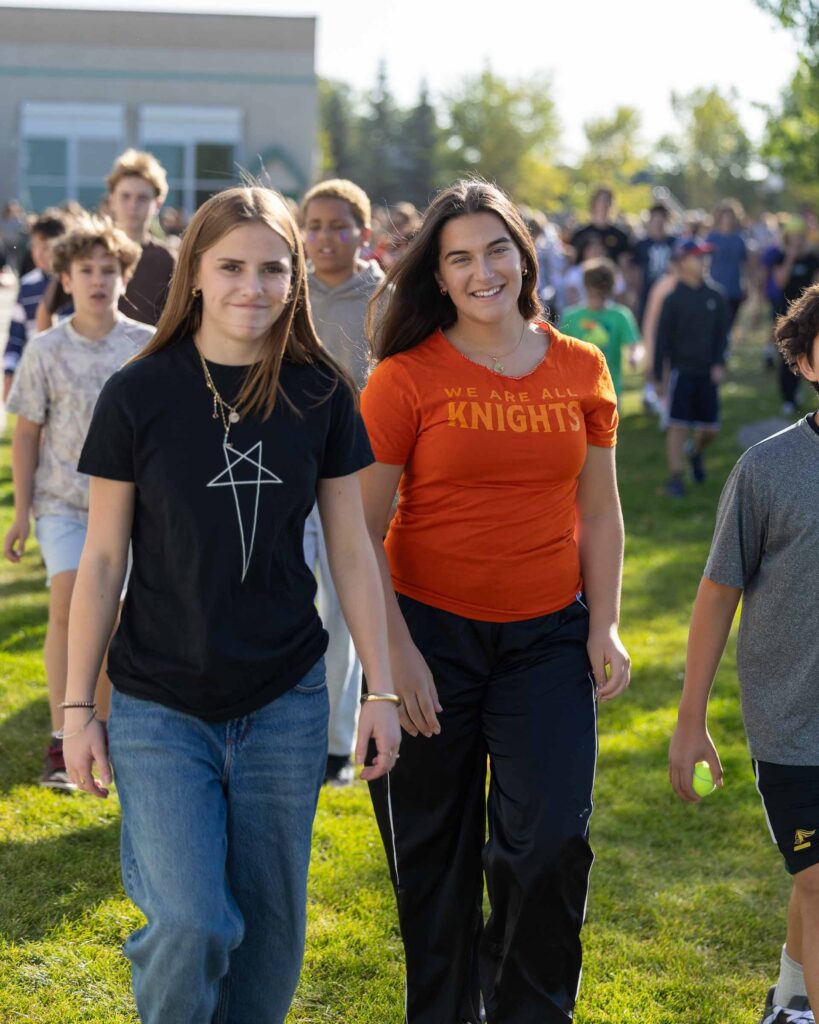 In the days leading up to the school’s run, students learned about Terry’s story, including his loss of a leg to cancer, his run for the cure, and this year’s theme, “finish it.” Learners were encouraged to decorate their shoes and share their reasons for running.
On Wednesday morning, everyone met in the Main Gym for an assembly, adorned in House colours. Nick Waterbury, CA’s head of athletics, introduced an alum guest speaker, who shared their experience with cancer treatment.
The school then kicked off this year’s House System (and the year-long race for the House Cup) before students and staff headed outside to run around the campus with their Houses, completing this year’s Terry Fox Run.
Each homeroom collected its “Toonies for Terry,” with CA raising $1,600 ($1,000 more than last year’s total)!
Mr. Waterbury emphasized how everyone’s efforts at Calgary Academy add to Terry Fox’s legacy and the $850,000,000 raised for cancer research.
“Every bit of money you raise increases that massive number of 850 million dollars. Every dollar we raise helps lead towards doing something to end this disease.”
A Community Standing (and Running) Together
While supporting Terry’s goal is why schools across Canada run each year, this event showcased the strength of CA’s community. Whether it was the staff members setting up this year’s route early in the morning or older students running with younger ones, everyone worked to make the day successful.
Demetra Mylonas, CA’s student wellbeing specialist and planner of this year’s run, was proud to see students and staff support each other Thursday morning.
“Our goal was to participate 100% in our Toonies for Terry campaign and show our school spirit by wearing our House colours! It was an inspirational day—everyone lent a helping hand to prepare for our event, our Senior School students helped our youngest students, parents ensured their kids were prepared, and our teachers engaged our students with meaningful lessons and activities.” – Ms. Mylonas
With the Terry Fox Run completed, the CA community looks forward to future all-school events throughout 2025–2026.
Support Our Construction Lab: Bike Donations Needed
Calgary Academy’s Construction Lab allows students to get their hands (safely) dirty. One of the flagship units in Construction Lab is the Grade 8 bike mechanics module.
As the 2025–2026 school year begins, CA’s Construction Lab teacher, Graham Diehl, needs used bike donations to supply students with hands-on learning.
What is the Bike Mechanics Module?
In Grade 8 science, students explore the concept of simple machines. A bicycle is a great example—a complex machine composed of various simple machine subsystems. Students learn about various systems, subsystems, drivetrains, and linkages through this unit.
At a glance, a bike looks exactly like what it is. However, it’s actually a series of simple machines—levers, pulleys, wheels, and axles working together to push a rider forward.
Using the bike as a hands-on learning tool, students disassemble and service and reassemble the bicycle. In the process, they gain a deeper understanding of its mechanical systems and are introduced to the marketable skills of bike repair and servicing.
The Construction Lab has been restoring bikes for years, giving students access to unique skills. Mr. Diehl has noted that these skills can lead to a future in mechanics—whether it’s a part-time job or a career.
“The skills students learn on a bike are interchangeable, or at least an introduction to, mechanics. A lot of bike mechanics progress into car mechanics… So many different small pieces create this machine, and that’s basically what a car is.” – Mr. Diehl
All the bikes used in this program have been donated. They arrive in many conditions—some nearly new, others barely rideable.
Regardless of the starting condition, students use these bikes as learning platforms, refurbish them to good working order, and then donate them back to the community through various organizations.
When students have access to these used bikes, they can:
- Access hands-on learning tied to their coursework
- Restore used bikes to working condition
- Support the local community
Have a Used Bike to Share?
Currently, Calgary Academy is nearing the end of its bike supply.
The school is specifically looking for bikes with shiftable gears and hand-operated brakes, which are the most useful for teaching key mechanics skills. Adult-sized bikes are great for this unit, and child-sized bikes that have 20-inch wheels (or greater) are typically where multi-geared bikes start.
What Used Bikes are Best for the Construction Lab?
There is an easy way to know if you have a used bike best suited for the Construction Lab!
If your bike has a tire size (located on the sidewall of the tire) of 20 inches or greater, it would be a perfect fit for Grade 8 bike mechanics. While smaller bikes are still welcome, they’re less suited to this unit’s learning objectives.
If you have a bike you’d like to donate or plan to replace your child’s bike and would like to give the old one a second life, please contact Mr. Diehl.
Congratulations to Our June 2025 Exemplary Practice & Student Showcase Recipients
June is a time to recognize Calgary Academy’s outstanding staff and students. The Exemplary Practice and Student Showcase awards help shine a light on exceptional members of the CA community.
These awards recognize the contributions of staff and students who demonstrate excellence, leadership, and innovation and ultimately support the school.
This year’s June awards feature four winners:
- Ms. Andrea Page
- Ms. Leeanne McLim
- Zeke M.
- River B.
Ms. Page and Ms. McLim
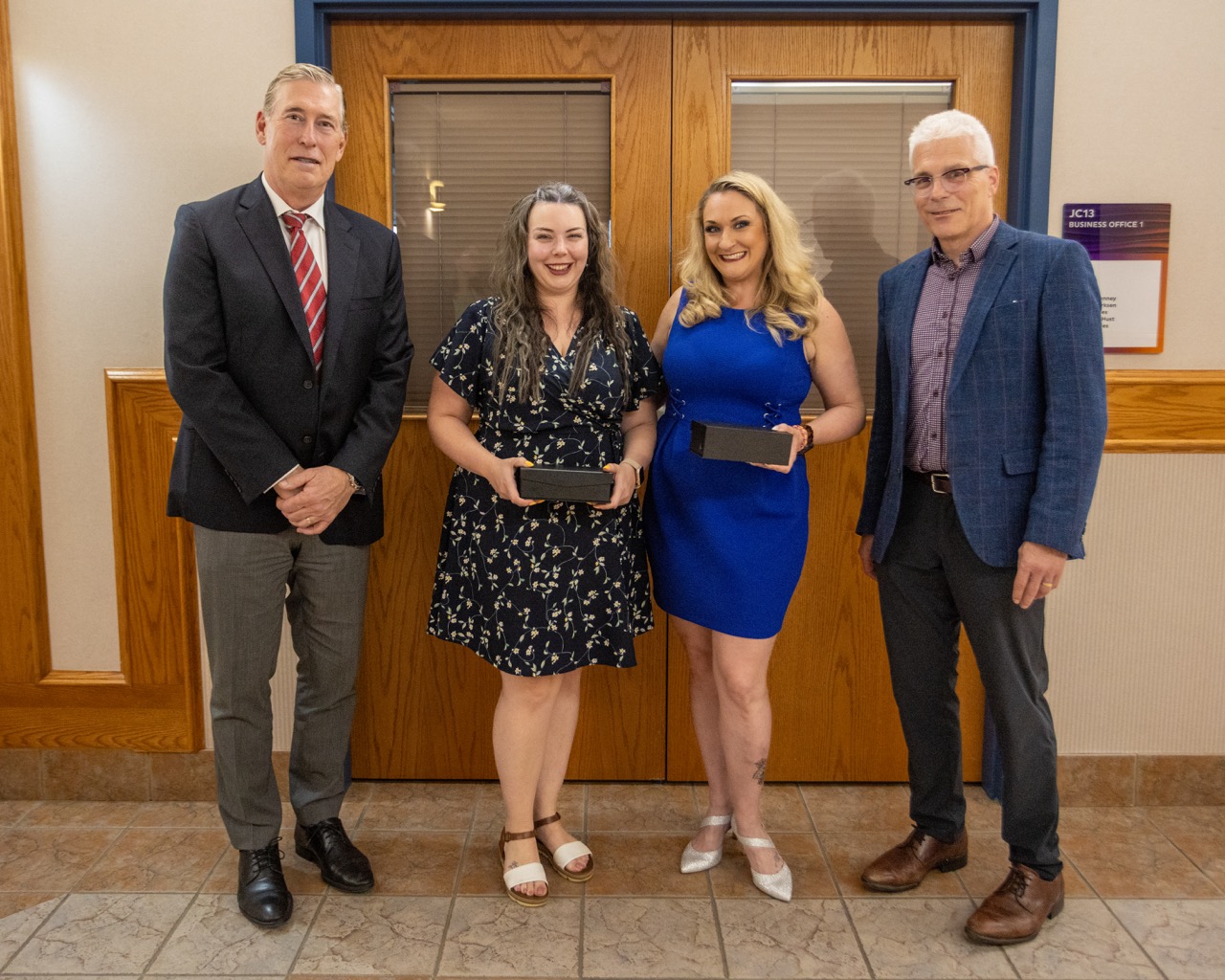 Ms. Page and Ms. McLim are the recipients of the Board’s Exemplary Practice Award for June 2025. This dynamic duo provides an incredibly rich and rewarding performing arts experience for our students and their families. Each year, they organize and lead multiple drama productions, dedicating countless hours after school with students, from early September through mid-May.
This year, we were fortunate to enjoy a Junior School production of Witchful Thinking, which allowed students in Grades 5–8 to shine on stage. At the same time, these two drama aficionados also directed our Senior School production of Little Shop of Horrors.
Many of those students began their drama journey in Junior School and have continued through to Grade 12. Leeanne and Andrea instill in them the values of dedication, hard work, and perseverance. This year, two of our long-time drama students are pursuing theatre in post-secondary education—a direct reflection of the time, mentorship, and energy these educators have invested in them.
Zeke and River
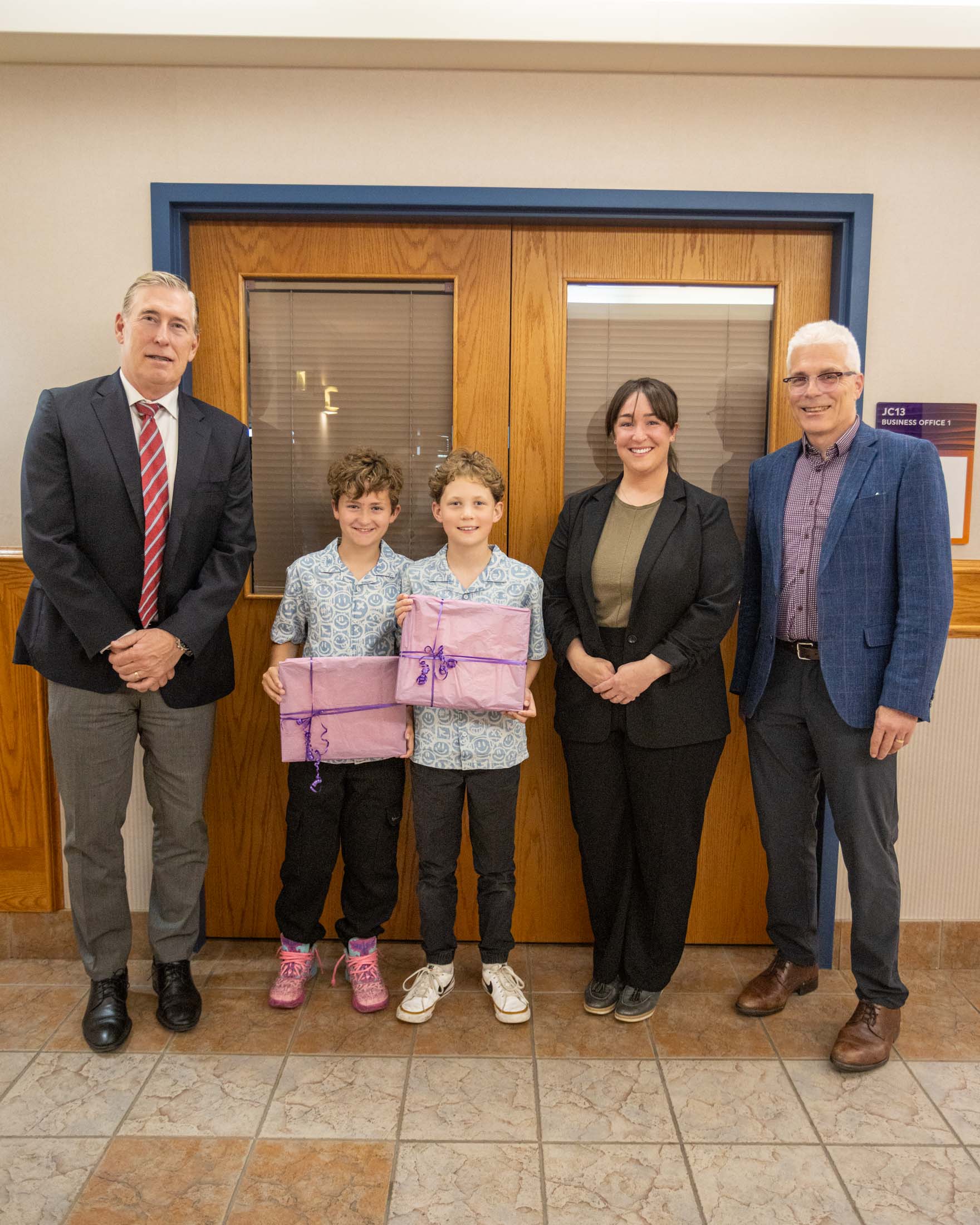 Two Grade 4 students, Zeke M. and River B., are the recipients of the Board’s Student Showcase Award for June 2025.
Zeke and River exemplify the qualities we hope to cultivate in every learner: character, service, and a deep commitment to the community. They are not only students of strong academic and personal integrity but also young leaders who have made lasting contributions to our school in ways that go far beyond the classroom.
Together, they co-founded the Elementary Clean-Up Crew—a daily initiative that began simply as a selfless gesture and has since become a symbol of their shared values. They took it upon themselves to support our custodial staff daily, not because anyone asked them to, but because they noticed a need and quietly stepped in to help.
Together, these two students exemplify what it means to live out the REACH values in everyday practice. Zeke and River are role models in their unique ways. They give their best, elevate those around them, and represent the very best of who we are as a school.
Congratulations to these deserving individuals on their achievements!
Instilling a Love of Music at Calgary Academy
Calgary Academy’s Music Room sits just outside the school’s main building. Nestled between the Junior and Senior Schools, the classroom is a place for creativity, exploration, and risk-taking.
One of the staff members orchestrating the music program is Jory Kinjo, a music specialist who brings years of experience to the classroom.
Balancing Fun and Theory
Music is something almost everyone experiences when they’re young. Even without playing themselves, children can gain an appreciation for a particular genre or instrument.
When you nurture a love of music as learners grow, you see them excited to try anything. Mr. Kinjo noticed these differences between Junior and Senior School students. They all love music, but interact with it for different reasons in class.
“As students get older, they gain a deeper knowledge of music because they listen to it more in their everyday lives. They become more educated in genre and artists, and desire to go deeper… Meanwhile, the younger students aren’t quite as specific. They like what they like, but they’re open-minded to the other stuff, and they want to have fun in the classes, which is wonderful.” – Mr. Kinjo
Mr. Kinjo strives for a classroom of creativity and respect, where students can try new things and see what inspires them. Whether it’s YouTube karaoke, percussion through Boomwhackers (long plastic tubes—a class favourite), or trying a new instrument, he always focuses on fun and exploration.
There are obvious foundations to learn in music class, but Mr. Kinjo doesn’t worry about all the rules. He finds a balance of theory and practice to encourage students to find their passion for music.
“My mom always said, in art, you learn all the rules so that you can break them. You need to be educated on the art form, and then at the same time, not let that box in your creativity.”
A School Year of Music
Mr. Kinjo has appreciated the chance to work at Calgary Academy this school year. As a professional musician, he’s typically on tour around this time of year. However, he jumped at the chance to support students in the classroom.
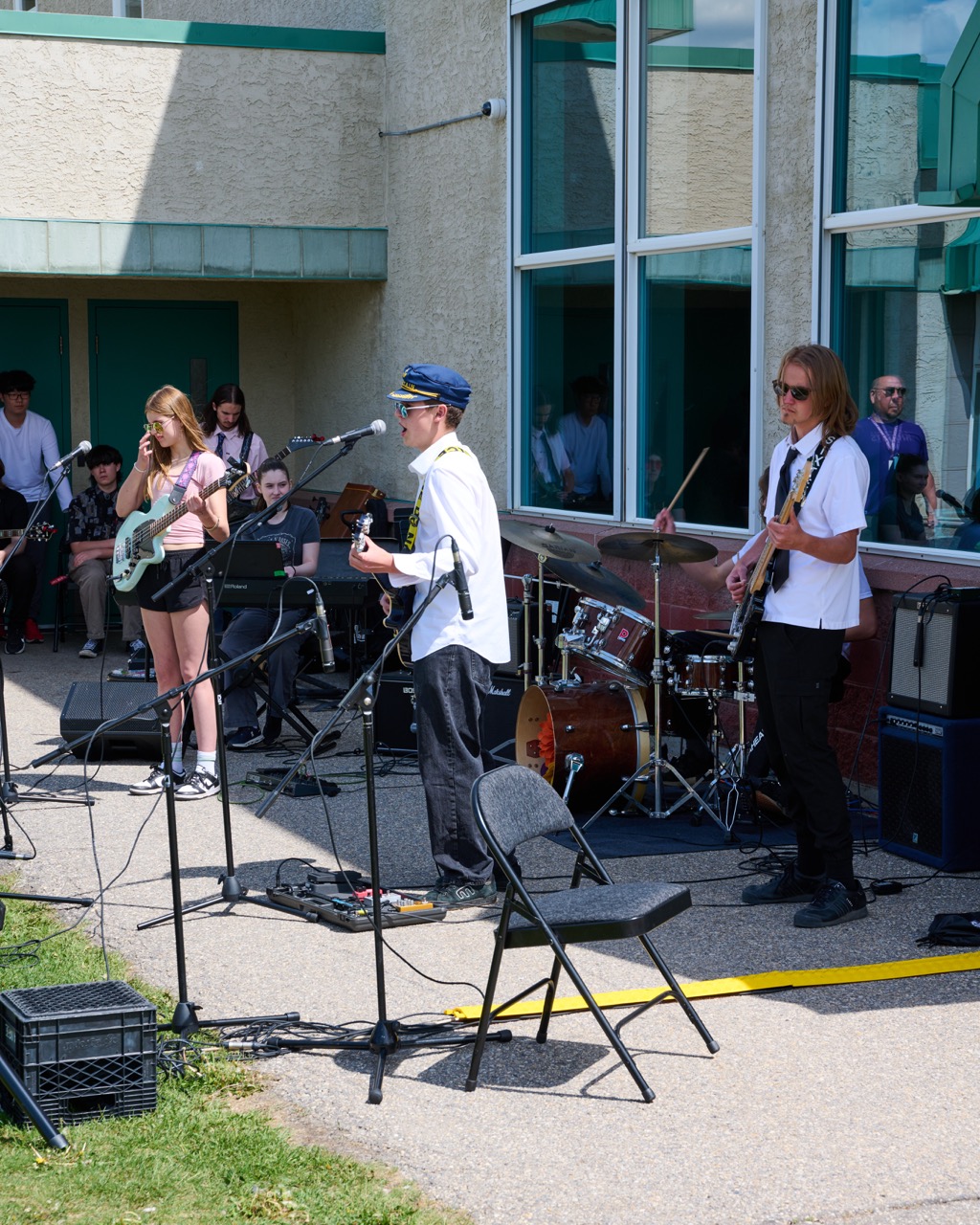 He has been impressed by his students throughout all grades, from seeing the confidence build in his Junior School students to recording songs professionally at OCL Studios with the Senior School students.
“I say that this is a safe space to create. Nobody here is perfect at music… It’s a testament to the students and how comfortable they are here that they’re willing to be creative and be themselves.”
As the end of June approaches, Mr. Kinjo has been proud to see the students’ hard work, and they have shown it off all year, performing at several events, including a Concert Band showcase in January and CA’s Fun Day on June 6.
Support and encouragement can mean the world to learners in the classroom, especially in the arts. When a love for music is fostered early, it can lead to a lifelong passion, something Mr. Kinjo knows from experience.
“The arts are something you can take with you, no matter what age. And just like sports, when there’s an imprint on you when you’re younger, it gets deeper.”
A Home Away from Home: Louise and Mia Kladnik
Calgary Academy has changed a lot throughout its years of operation—it didn’t begin in the building that hundreds of students visit today.
Over its 40-year history, generations of CA alumni, such as Louise (‘88) and Mia Kladnik (‘24), have attended the school. A former student and now a staff member, Ms. Louise Kladnik and her family have been tied to the community for decades.
With her oldest daughter Mia’s recent graduation and her second daughter, Emma, walking the stage this month, mother and daughter have reflected on what the school means to their family.
Family Ties
The Calgary Academy Ms. Kladnik and Mia attended looked different, but the school’s spirit has stayed the same.
Ms. Kladnik attended CA in its first years of operation, learning at the school from 1985 to 1988 and participating in one of the school’s first graduating classes! In the 1980s, the school had a handful of students and staff spread across rented classrooms.
Her parents moved her to the relatively new school for the extra support she needed in her classes. Ms. Kladnik fondly remembers how impactful her teachers were during her student days.
“When I was a student, it was a very small school. There were maybe three or four classes. It was kind and caring, with compassionate teachers. You felt like a family.”
Mia graduated from CA in June 2024, capping off six years at the school. Starting in Grade 7, she remembers her first ever Meet & Greet event, where she met many teachers who would later cheer her on at graduation.
Moving to a new school can be nerve-wracking, but Mia quickly learned that everyone at CA was there to support her.
“My favourite memory is my first Meet & Greet here. Coming from a school that wasn’t very effective for me, I was like, ‘wow, these people are really nice.’ I knew this place would be my home away from home.” – Mia
CA is Always a Place to Call Home
Ms. Kladnik currently works as an education assistant at Calgary Academy’s Junior School, returning in the last few years after stepping away from her career to raise her daughters.
She always found ways to recommend CA to other families at events or her daughters’ extracurriculars. Her mother had learned about the school through a personal connection when Ms. Kladnik was a student, and she always looked to spread the word.
She remembers telling a mom at one of Mia’s dance classes about CA, who eventually enrolled their child at the school.
“I would always say, ‘you should look at our school.’ And I always still said our school because it’ll always feel like it.” – Ms. Kladnik
When Ms. Kladnik noticed similar academic struggles in Mia, she enrolled her daughter at Calgary Academy. There, Mia received the same supportive education with the benefits of an expanded permanent campus, extracurricular options, and everything else the school offers today.
Mia made the most of her time at CA, helping choreograph school drama productions, running a dance club for Junior School students, and winning the Legacy Award in her senior year for exemplifying the school’s REACH principles in the community.
With Mia now attending Mount Royal University (MRU) and Emma graduating, Ms. Kladnik is excited to continue her impactful work at Calgary Academy while watching the school grow.
Currently in Open Studies at MRU, Mia hopes to apply to the Early Education program. No matter the road ahead, she knows it’ll lead back to Calgary Academy, where she hopes to work one day.
When asked about what she’s excited about in the future, Mia immediately had her answer.
“Coming back here and working, duh!”
Jon Buckingham: Building a Career Through the Power of Community
Community has the power to guide, inspire, and transform lives. It provides a sense of belonging, a network of support, and the encouragement to pursue passions and dreams.
For Jon Buckingham (’14), the support and encouragement he found at Calgary Academy and later within the online gaming community became the foundation for discovering his purpose and building a fulfilling career.
CA Days
Jon attended Calgary Academy from Grades 4–12, graduating in 2014. He has many memories of his time at the school, particularly travelling through Vietnam, Laos, and Morrocco with the International Travel Studies (ITS) club. However, trips, classes, and clubs weren’t the biggest impacts on Jon’s time at CA—the community was.
In Jon’s words, his life wouldn’t look like it does now if he never attended Calgary Academy. He appreciates his time at the school, where he learned more about the world and had the chance to explore the potential careers he was interested in.
Jon remembers sitting in the guidance counsellor’s office to discuss his future. They had done career tests, but some of the recommendations didn’t match what he was interested in until he spoke with his teachers, who encouraged him to pursue engineering.
After two years of engineering at the University of British Columbia’s Okanagan campus, Jon realized that while he enjoyed aspects of the program, it ultimately wasn’t for him. However, he was able to use this knowledge in his current career path: virtual reality (VR) production.
“I took the best parts of what I learned in engineering and applied them to the things that I love, which are video games and community.” – Jon
The Power of Community
After leaving university, Jon began working odd jobs, eventually getting into VR as a hobby. He met people with similar interests on VRChat (his eventual employer), a social platform where people can interact with others in 3D virtual spaces, like a chat room. The VRChat community gave Jon advice and resources on pursuing his passion, and he began working with 3D modelling and animation.
Jon credits this online community as a major stepping stone in his career, stating he was “in the right room with the right people.” As he worked hard to build his skills, Jon saw an advertisement for Virtual Reality and Augmented Reality Design and Development at Vancouver Film School, a pilot program that was perfect for his interests.
He decided to take a step forward and apply, creating a portfolio that made him stand out among the hundreds of applicants.
“I said, ‘I’m just going to follow my gut. I’m going to put everything that I’ve worked on and built on my own into this program.’ And out of around 400 international applicants, they picked 14 students. I was one of the first cohorts there, and it got me industry placement, networking, and everything that I needed to get from school into a career.” – Jon
After graduating from Vancouver Film School, Jon found his current job at VRChat, where he works behind the scenes in the virtual world where his developer journey first started.
His love for the platform has only grown as he’s worked with the dedicated team, eventually moving from development and coding to production, which focuses on high-level planning for VRChat’s future.
He has seen the impact of his work in the company’s community—the platform has a deeply engaged audience of approximately 2 million users. Since he was young, Jon has wanted to change the world, and while he’s not affecting everyone, he is happy to have “started with this small portion.”
Community has always been a foundation of Jon’s life. He experienced the benefits of a supportive community at Calgary Academy and online with VRChat. He credits it for helping him get to where he is now.
As Jon looks to the future, he’s excited to continue his work and encourages everyone to find their community, wherever it may be. He sees community as one of the pillars of life.
“I think the entire human experience boils down to comfort, community and communication… Community has been the thing that launched me from being uncertain about what my future looks like to knowing that I have people to fall back on and rely on.”
Psychologist’s Perspective: May 2025
These months seem to be going by more and more quickly! It is hard to believe we are almost at the end of the school year.
This month, our theme has been Empathy. When I watch the news, look at social media, or even go to the grocery store, I am reminded repeatedly how much we need to practice and model empathy. We never truly know another person’s story; everyone has a story. In a society that seems quick to judge, comment, and gossip (often from behind a screen), it is essential we pause long enough to consider the other person, their feelings, and their story.
How can we, as parents, help our children understand and practice empathy? Here are a few thoughts.
- Define empathy. I like this definition from Verywell Mind, which states that “empathy is the ability to emotionally understand what other people feel, see things from their point of view, and imagine yourself in their place. Essentially, it is putting yourself in someone else’s position and feeling what they are feeling.”
- One caveat—there is a balance needed when we practice empathy. According to Robin Stern and Diana Divecha, “the art of empathy requires paying attention to another’s needs without sacrificing one’s own. It demands the mental dexterity to switch attunement from other to self.”
- Help your child describe and label their feelings when they are little.
- For example, “I see that you’re clenching your fists, and your face is red. You seem angry.”
- When reading picture books or seeing images online or on television, ask what people might be feeling. Discuss why that may be.
- Normalize feeling all emotions. We are not meant to be happy 100% of the time, and we need to learn to sit in discomfort. It seems that as a society, we spend a lot of time trying to avoid feeling our feelings. We try to push them away in a variety of ways. What a gift it is to be mindful, present, and aware of our thoughts and feelings, both cognitively and physically. This is a gift that needs to be cultivated and practiced.
- One caveat—some neurodivergent individuals express and experience emotions and empathy differently. We need to be respectful and neuro-affirming in our parenting approach. If you want to learn more, read about the Double Empathy Problem in the literature.
- Don’t be a “lawnmower parent”—stop clearing your child’s path so that they can live a problem-free life. Step back and let your child face challenges and learn how to solve problems. This not only allows them to identify with the struggles of others but it builds much-needed resilience. It communicates to our children that we know they are capable humans, and they don’t need us to jump in at every turn to “fix things.” Kristina Morgan is a clinical psychologist at Lourdes Hill College. She says it is great for kids to have problems at school age because when they are young those problems tend to be:
- Low stakes
- Supported by adults
- An opportunity for learning.
- Teach your kids how to listen. Because we all come from different upbringings, we cannot truly understand what someone is going through and how they are feeling. We don’t want to assume that we do. So, we listen, ask questions, and then listen some more.
- When your children are struggling, and they come to you with hurt feelings because of someone else’s words or actions, listen and validate their feelings without trying to fix anything. Once they are emotionally regulated, explore what the other person may be going through and why they may have behaved the way they did; not to make excuses for them but to promote understanding.
- Challenge judgmental remarks within your home. Model kindness in your interactions with others and on social media.
- Break down stereotypes. Call them out when you hear and see them. Have an open discussion about where these stereotypes came from and why they are harmful.
- As a family, find and discuss a cause that you’re passionate about. Maybe it’s homelessness, addiction, trafficking, domestic violence, poverty, etc. Then learn more about this cause and seek to understand those impacted. Find ways to support whether that’s by raising awareness, volunteering your time, and/or offering financial support. I know that I feel incredibly lucky to live where and how I do, and I look for ways that I can be of service to others.
Wellness Updates
Grades K–9
As the MindUp program wraps up in our Grades 1–9 classrooms, students are reflecting on how they can thoughtfully show up in the world and care for their communities. Recent lessons have focused on mindful consumption—examining the impact of media and overconsumption of goods—and how our choices affect ourselves and the world around us. Through conversations, activities, and self-reflection, students build a deeper awareness of their values, actions, and the importance of compassion, gratitude, and responsible citizenship as they carry these lessons beyond the classroom.
Grades 10–12
This month, students in Grades 10–12 have been discussing empathy. They engaged with a questionnaire that encouraged them to explore how empathetic they think they are. They also discussed scenarios they may encounter at school. Each scenario encouraged students to practice empathy by considering the emotions and perspectives of the individuals involved.
If you have questions about wellness programming in Grades 10–12, please contact me.
Counselling Services and Wraparound Support
We continue to have a counsellor supporting the needs of our learners in K–8. If you want to have your child connect with her, please reach out to Jenny Duffield.
I am here to support the needs of our Grades 9–12 students. If you want your child to connect with me, please reach out to my email.
Lastly, if you have any questions or concerns regarding your child’s learning journey, you can also reach out to our Director of Learning, Erin Ellis.
Serena Braun
Registered Psychologist